
website audit service
Website audit service: every issue, and exactly how to fix it
A website audit here reads five sides of your site, from its code and its speed to its security and its content.
- Full crawl and index check against Search Console
- On-page read: every page's title, heading, structure, links against the searches that matter
- Speed measured on real phones — key pages before, with the causes named
- Security read: plugins, users, endpoints, the host's exposure
- Content read: thin, duplicate, missing — and the pages already earning traffic
- A written report in plain words, read through with you on a call; each fix priced as a line
Try it
Five reads of your site, ranked into one list of fixes.
Watch the reads run, then tap a finding to see the fix beside it. The order is the order that matters; the numbers are an illustration.
- Technicalreading…
- SEOqueued
- Speedqueued
- Securityqueued
- Contentqueued
Reading the site the way Google and a visitor do…
- findings appear as each read finishes
Illustrative findings — the real report is about your site, read by a developer, priced per line and re-checked after the fixes.
Overview
What the website audit service covers
A website audit service from my team is five reads of the same site, written up as decisions. Technical — can Google crawl and index every page. SEO — do the pages match what people search, with the titles, structure and markup right. Speed — what a phone sees, measured. Security — the open doors, which on WordPress means the plugins, the user accounts and the old remote-publishing door called XML-RPC. Content — what's thin, duplicated or missing.
My audit tools come from the SEO tool company I founded, DevsKing, and they run the crawl alongside the free checkers on this site. The reading is a developer's, so a slow page comes back with the image, the plugin or the script named.
I read every audit myself.
- Technical: crawl, indexing, redirects, sitemaps, structured data
- SEO: pages against searches, titles, headings, internal links
- Speed: measured on a phone, down to the image, script or plugin behind each delay
- Security: the open doors, especially on WordPress
- Content: thin, duplicate and missing pages
What a scope from me looks like
What the audit delivers, in writing
Included
- Full crawl and index check against Search Console
- On-page read: every page's title, heading, structure, links against the searches that matter
- Speed measured on real phones — key pages before, with the causes named
- Security read: plugins, users, endpoints, the host's exposure
- Content read: thin, duplicate, missing — and the pages already earning traffic
- A written report in plain words, read through with you on a call; each fix priced as a line
Phase two
- The fixes, by my team — each a line you can accept
- SEO work from the audit's page list
- A speed pass or a care plan, if the audit points there
Not doing
- Guaranteed rankings
Here's the scope for a full audit of a site that's already live.
With Search Console, analytics and admin access, I'm reading the site from the inside as well as the outside.
Process
How a website audit runs
Six steps, and the site keeps running untouched while it's being read.
- 01
The call
What the site is for, what you think is wrong, and what the free checker found. If the free look already answers it, I'll say so.- You
- Run the free check; tell me what worries you.
- Get
- Whether the full audit is the right next step
- 02
The crawl and the read
A full crawl with the audit tools, with Search Console read alongside it. Speed is measured on phones, the plugins, users and endpoints are checked, and the content is read page by page.- You
- Search Console, analytics and admin access.
- Get
- Every issue found, with its cause
- 03
The report, written
Everything found, written in plain words — what it is, why it matters, what fixes it.- You
- Read it when it's ready.
- Get
- The report
- 04
Read together
On a call, we'll go through the report page by page, and you'll decide the order.- You
- Ask everything; decide the order.
- Get
- A report you understand
- 05
Your fixes, priced
Every fix gets its own line and figure.- You
- Decide who fixes what.
- Get
- A priced list, yours to use
- 06ongoing
The re-check
Once the fixes are done — by whoever — I re-crawl and re-measure, and you'll see what changed.- You
- Tell me when the fixes are in.
- Get
- A before-and-after, in numbers
- The call
- The crawl and the read
- The report, written
- Read togetherboth
- Your fixes, priced
- The re-check
Tech stack
What the audit is run with
Google's data, the audit tools, and a developer reading the result.
| CRITERION | What I use | What it finds |
|---|---|---|
| Technical | Site audit crawler; Search Console coverage | Pages Google can't reach, won't index, or reaches twice |
| SEO | Keyword research; the free SEO checker | Pages that match no search; searches with no page |
| Speed | The free speed check on real phones; Core Web Vitals | The image, script or plugin behind the wait |
| Security | The free WordPress site check; a manual read of users and endpoints | The doors a hack would use |
| Content | A developer reading every page | Thin, duplicated, or saying the wrong thing |
| Report | One document, plain words, ranked | What to do first, and what can wait |

Why it matters
Why the audit ends in a ranked list of fixes
An audit is useful when the owner can act on it. So the report is a short list in the order that matters: the issues costing enquiries, the doors a hack would use, the pages Google can't read — and beside each, what fixes it and what that costs. A developer reads every tool finding and writes that list by hand.
Then the re-check. Whoever makes the fixes, my team or yours, the site is crawled and measured again afterwards, so the audit ends with a before-and-after in numbers.
An audit is a fixed read with a written result, which is what makes it a low-risk first project. You'll keep the report, whoever does the work.
- Ranked by effect on enquiries, traffic and security
- Each finding written up by a developer
- Plain words, with the cause named
What the research says
What makes visitors trust a site, or leave a checkout
People judge a site partly by how it looks, and shoppers give their own reasons for leaving a checkout. These are the published figures.
70.22% of online shopping carts are abandoned (average of 50 studies); these are the top reasons shoppers give.
- Extra costs too high (shipping, tax, fees)40%
- Delivery was too slow20%
- I didn't trust the site with my credit card information19%
- The site wanted me to create an account18%
- Too long / complicated checkout process17%
- Website had errors / crashed17%
These figures are other people’s research, quoted as published. Your own site’s numbers come from the free checks and the audit.
Worried about one thing on your site?
Name it on the first call and I'll read that first. A slow page, a drop in enquiries or a security warning goes to the top of the read, and the report answers it in plain words.
Case study
An SEO engagement that began with the read
Daly Middle East, a UAE industrial supplier that agreed to be named, is the audit-first engagement on the books: in 2025 the read came before the SEO work.
The team behind every audit is three developers, a designer and three SEO specialists in the Kolkata, India office, plus around six people working remotely.
Client feedback
What clients say
- ★★★★★
“Very professional Team and well prepared. I will definitly hire him and the team again.”
After the read-through
You decide what to fix first, with the report in hand
The report is in plain words, and we read it through together on a call. You can hand it to my team or to any developer you choose, and the first lines on it are the ones that'll matter most.
- 900+ projects
- since 2017
- 4.9★
- 400+ five-star reviews on Fiverr
- 9+ years
- building WordPress and Next.js sites
Support is the whole team, not one person — reach us any time, and someone picks it up.
“The freelancer demonstrated excellent problem-solving abilities, tackling challenges head-on and coming up with innovative solutions, maintains clear, concise, and prompt communication. Any questions or concerns I had were addressed quickly and professionally.”
Schedule a Meeting
On a call with the person who would lead the work. Bring what you have, and leave with a plan, whether or not you hire us.
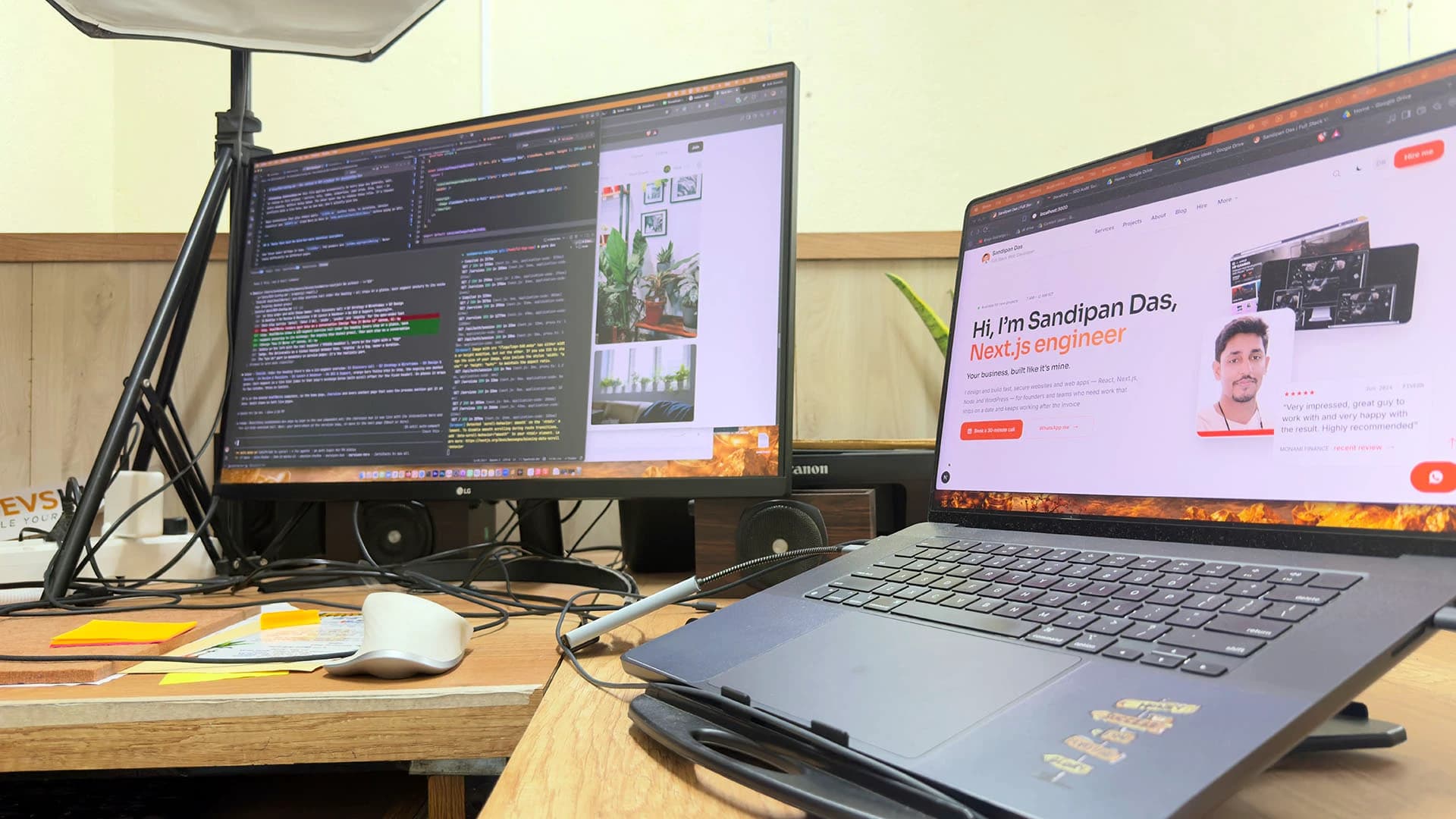

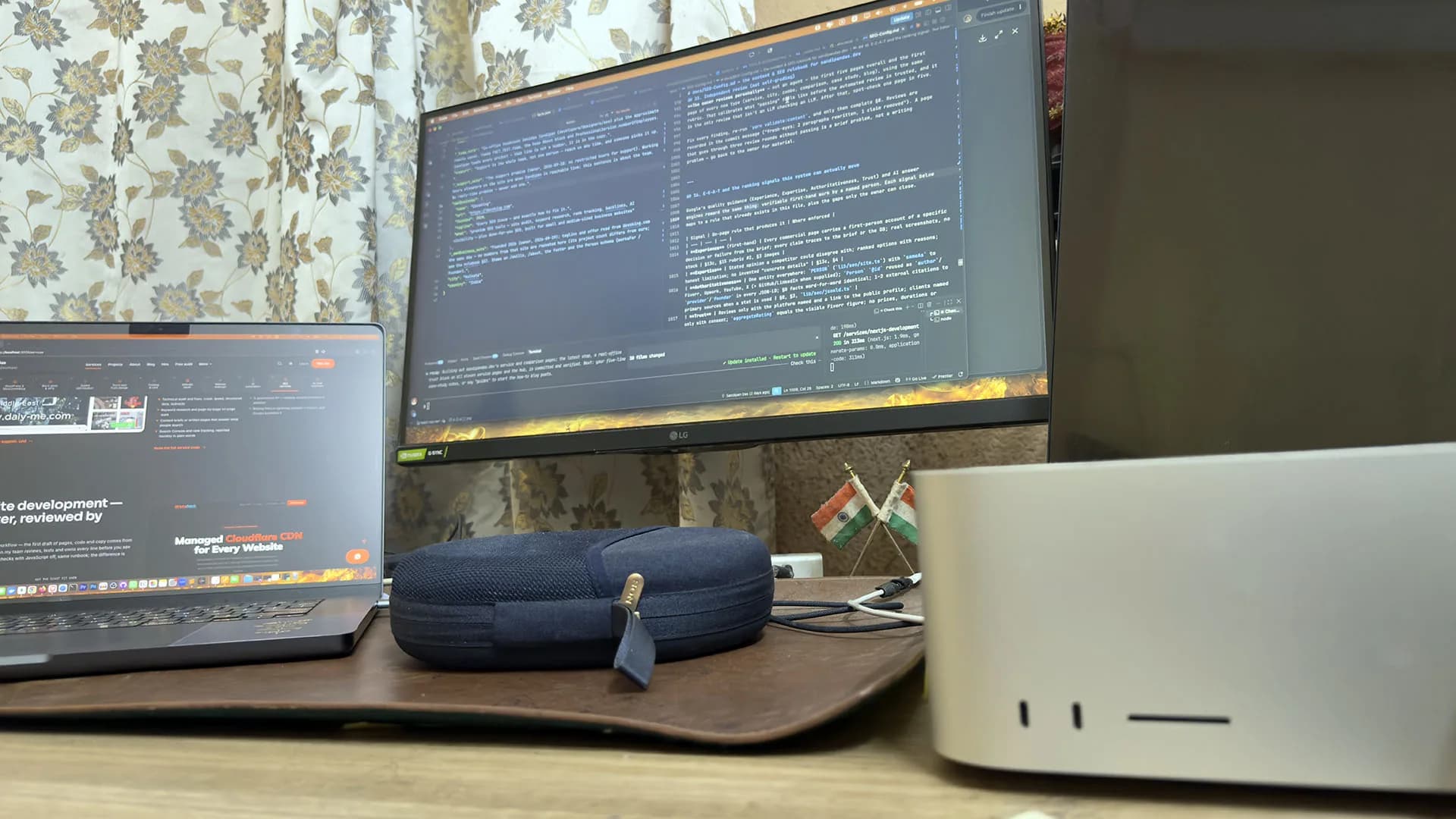
A real office, real people
Led by me, built with my team — in Kolkata, India.
The team: three developers, a designer and three SEO specialists in the Kolkata, India office, plus around six people working remotely. Every audit is read at this desk — the tools find the issues, a developer reads them and writes the fix beside each.

Sandipan Das
You talk to me; I’m the one accountable for the work.
- Availability
- The team works on your schedule, in your time zone.
- Support
- Support is the whole team, not one person — reach us any time, and someone picks it up.
Pricing
How a website audit is priced
One line for the audit — the crawl, the five reads, the report and the call. The fixes that come out of it are priced per line, and the list is yours to keep.
And the re-check after the fixes? It's included in the audit line.
How an audit scope becomes a figure is shown on the quote page.
- The audit: one line, once
- The fixes: one line each
- The report: yours to keep
Next step
Free check first, then the full read
Run the free tools first — they cover the opening layer of the audit. When you want the whole site read, book a call and we'll set the audit's scope together.
What's the difference between the free audit and the website audit service?
- The free audit is a recorded video walkthrough of your site plus the free checkers — a first look at your site, and it's free. The website audit service covers the whole site: a full crawl, five reads (technical, SEO, speed, security, content), a written report in plain words, and a call to go through it together.
What does a website audit report include?
- A website audit report from me lists every issue found, ranked by effect and written in plain words — what it is, why it matters and what fixes it — across crawling and indexing, on-page SEO, phone speed, security and content. It ends with each fix priced as a line, and I'll read it through with you on a call.
Do you audit WordPress websites specifically?
- A WordPress website audit adds the plugin-by-plugin read: which plugins are out of date, which slow the site, and which leave a door open, plus the theme, the user accounts and the old remote-publishing door (XML-RPC). The free WordPress check among the tools here makes a first pass over exactly that, and the full audit goes the rest of the way.
Can I use the audit with my own developer?
- A website audit from me is written for any developer: each line names the issue, the cause and the fix in enough detail for your own developer or agency to carry out. If you'd prefer my team, we'll quote the same lines.
How is a technical website audit different from an SEO audit?
- A technical website audit checks whether Google can reach and index the site and how fast it is — Core Web Vitals, the three scores Google uses for loading, responsiveness and layout shifts. An SEO audit checks whether the pages match what people search. The full website audit service covers both, plus security and content, because a fast, crawlable site also needs the right pages.
Is a website audit worth it for a small business site?
- A website audit is worth it for a small business when the site earns its keep through enquiries, orders or bookings and you want to know what would bring more. It'll show whether the gap is speed, a missing page, an open door or thin content, so the budget goes to the fix that matters. The free check is a good first step, and the full audit carries on from there.
Published · Updated