
landing page design services
Landing page design services: one page, one job, measured
I design and build landing pages for paid campaigns, each one written around the ad that sends people to it.
- The call: the ad, the offer and the action the page is built for
- Design from your brand or a reference — approved before build
- Copy drafted from your material and edited by hand
- One form to your inbox (or your CRM), tested end to end
- Speed pass: sized images, no unused scripts, checked on a phone
- Analytics and conversion tracking, in your account; a fix window
Try it
Your design on the left. The code on the right. Drag the line.
The dashed frame is the Figma file — spacing, radii, columns. The page beside it is what the browser renders. Move the handle and the edges should meet; switch the overlay on to check every one.
Pixel-accurate means the coded page measures the same as the design at every breakpoint — this is the check I do on real devices before you see a preview.
Overview
What landing page design services include
Landing page design services, the way I run them, start from the ad. Someone searched, saw your ad and tapped. The page they land on repeats what the ad promised, answers the question in their head, and puts the form, the call button or the buy button where a thumb finds it. I design it from your brand, draft the copy from your material, wire the form to your inbox and measure the load on a phone before it goes live.
I build on WordPress when you'll run several campaigns and want to duplicate pages yourself, and on Next.js when the fastest first paint is the priority.
I'll keep it to one offer.
- A layout designed from your brand, approved before the build
- Copy drafted from your ad and your material, edited by a person
- A form that reaches your inbox or CRM, tested with a real submission
- WordPress or Next.js, whichever suits the campaign
What a scope from me looks like
A landing page scope
Included
- The call: the ad, the offer and the action the page is built for
- Design from your brand or a reference — approved before build
- Copy drafted from your material and edited by hand
- One form to your inbox (or your CRM), tested end to end
- Speed pass: sized images, no unused scripts, checked on a phone
- Analytics and conversion tracking, in your account; a fix window
Phase two
- A second page for a second offer or audience
- An A/B variant to test against the first, once there's traffic to read
- Google Ads or Meta ads management, as its own line
- The full site, when the campaign proves the offer
Not doing
- A promised conversion rate
Small, and still written down — the page, the form and the tracking each get a line. If you'd like a change later, it's added as a line the same way.
The offer and the material come from you. I shape how the promise reads, and the draft copy comes to you for approval before anything's built.
Process
How a landing page build runs
Six steps, from the ad to the numbers.
- 01
The call: the ad and the offer
The ad, the offer, the audience, and the action the page has to bring in. A campaign with two offers gets two pages.- You
- Bring the ad copy and the offer.
- Get
- The page's purpose, in a sentence
- 02
The page, in writing
The page planned top to bottom in writing, with the draft copy from your material beside each block.- You
- Confirm the promise is one you'll keep.
- Get
- The page plan and the draft copy
- 03
Design and build
Designed from your brand, built on a staging URL, the form wired and tested, the speed measured on a phone.- You
- Approve the design; supply the photos.
- Get
- A staging page you can open
- 04
Your click-through
You open it on your own phone and try the form, and I'll fix what you've listed, then measure again.- You
- Submit the form yourself; list what to change.
- Get
- A page you've tested
- 05
Live, with tracking
Live on your domain, with the ad pointed at it.- You
- Point the campaign at it.
- Get
- A live page with tracking
- 06ongoing
Watch and adjust
The numbers say what to change — the copy, the form or the offer. Small changes sit inside a care plan, and a second page follows once the first has results.- You
- Send the campaign numbers when you have them.
- Get
- A monthly read on what moved
- The call: the ad and the offer
- The page, in writingboth
- Design and build
- Your click-through
- Live, with trackingboth
- Watch and adjustboth
Tech stack
What a landing page is built with
Whatever loads fastest and lets you run the next campaign without me.
| CRITERION | What I use | Why |
|---|---|---|
| Pages you'll duplicate | WordPress — Elementor or the block editor | Copy the page for the next campaign yourself |
| Speed as the product | Next.js, server-rendered | The fastest first paint a phone can get |
| Forms | Native form → your inbox, or straight into your CRM | Tested with a real submission before launch |
| Tracking | Google Analytics, conversion events, in your account | Each form and call counted as a conversion |
| Images | Sized and compressed (WebP — the lighter modern format) | The hero image is the first thing the speed pass checks |
| Measurement | Speed check before and after; conversion by campaign | Each campaign's result, readable at a glance |
Why it matters
What turns a paid click into an enquiry
Everything on a landing page either helps the visitor take the one action or gives them somewhere else to go. A navigation bar adds six exits. A second offer asks for a decision the visitor didn't come to make. A paragraph about your history sits between them and the form. So the pages I build run in a plain order: the headline, the proof, then the answer to the main question. The form comes last. On the call, what to leave out is the part we'll discuss most.
Speed on a phone decides the rest. Paid clicks arrive on phones, and a page still drawing its hero image can lose the visitor before the headline shows. That's why the speed pass sits inside every landing page scope, measured on a phone. I build on a plain, light stack because it keeps that number low after launch too.
You watch the same conversion figure I do, before and after each change, and the data settles what worked.
- One offer per page, with the navigation left off
- A form placed right after the answer, tested before launch
- The proof straight under the headline
What the research says
How load time changes what mobile visitors do
Google measured real mobile visits, and Deloitte measured what a tenth of a second was worth across 37 brand sites. The green band is the load time Google calls good.
At 3.0 s a mobile visitor is +32% more likely to leave than at 1 s, as Google published it. Measure your page →
The rise after mobile pages got 0.1 seconds faster.
- Retail conversion rate8.4%
- Retail spend per order9.2%
- Travel conversion rate10.1%
These figures are other people’s research, quoted as published. Your own site’s numbers come from the free checks and the audit.
Your ad copy is enough to start
The ad copy and the offer are all the first meeting needs. From those two I can sketch the page's order and say whether WordPress or Next.js suits the campaign. If you'd like the Google Ads or Meta ads campaign run as well, my team scopes that alongside the page.
Case study
Service sites built around the enquiry
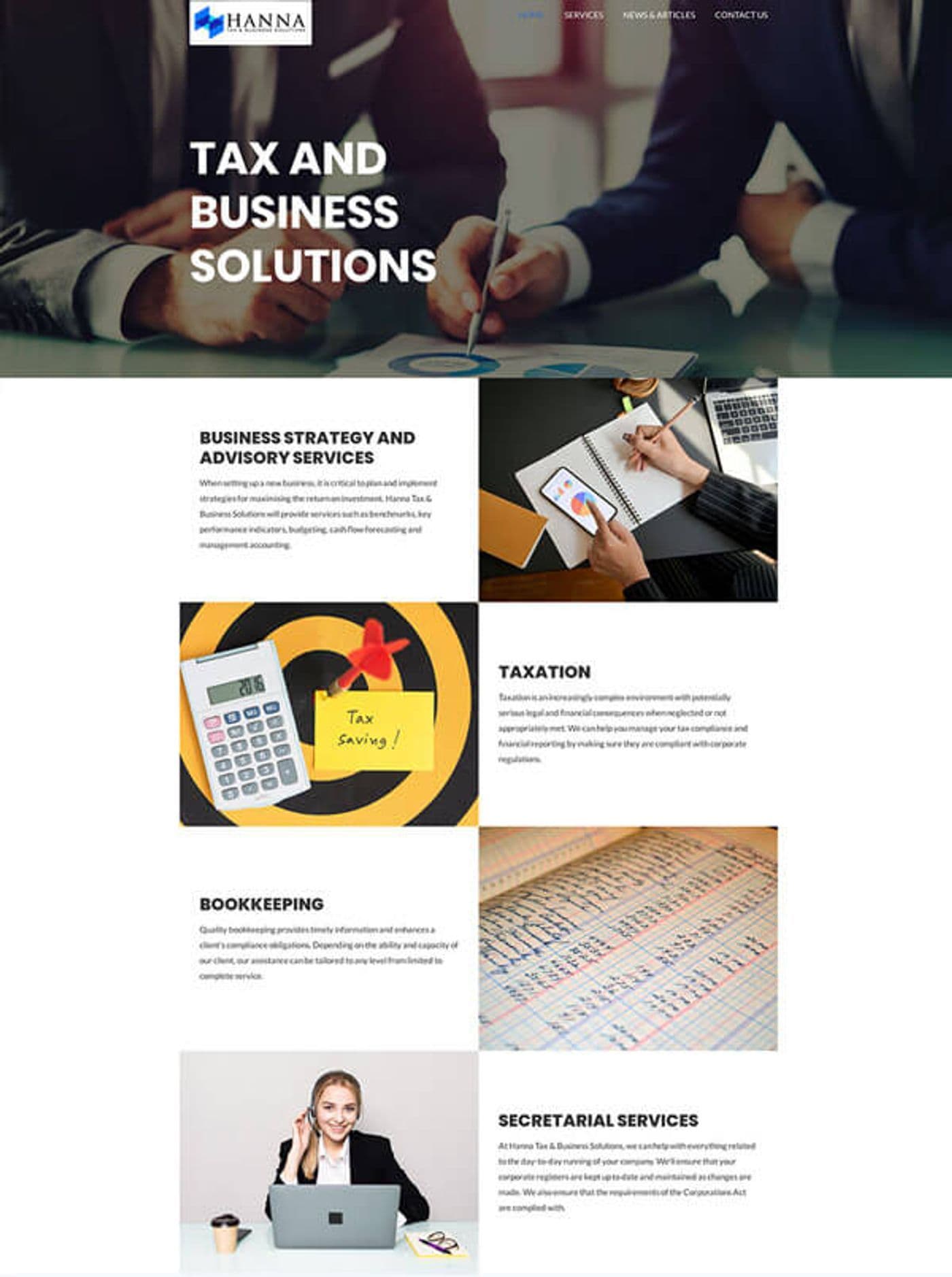
Go Cleaning Brisbane, Green Rhino Restorations and Hanna Tax and Business are service businesses whose home pages do the landing-page job. A call, a quote request or a booking sits right at the top. They're all WordPress builds, published with each client's consent, and each carries a five-star review.
When the campaign goes live
The page carries on where the ad left off.
The headline and the proof are the first things on the screen, and the form posts to your inbox after an end-to-end test. When you're ready for the next campaign, it'll start from the same layout.
- 900+ projects
- since 2017
- 4.9★
- 400+ five-star reviews on Fiverr
- 9+ years
- building WordPress and Next.js sites
Support is the whole team, not one person — reach us any time, and someone picks it up.
“The freelancer demonstrated excellent problem-solving abilities, tackling challenges head-on and coming up with innovative solutions, maintains clear, concise, and prompt communication. Any questions or concerns I had were addressed quickly and professionally.”
Schedule a Meeting
On a call with the person who would lead the work. Bring what you have, and leave with a plan, whether or not you hire us.
A real office, real people
Led by me, built with my team — in Kolkata, India.
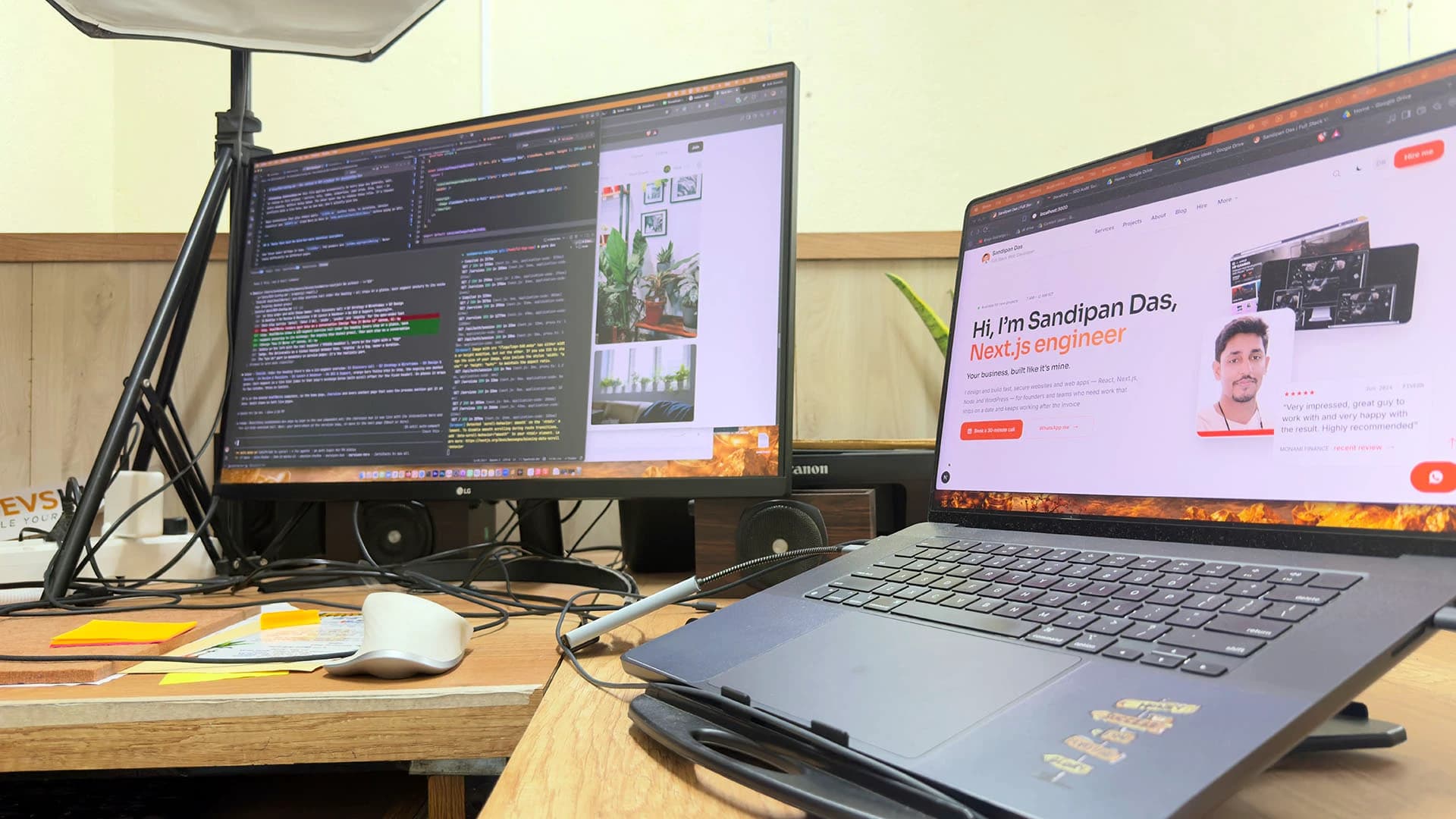
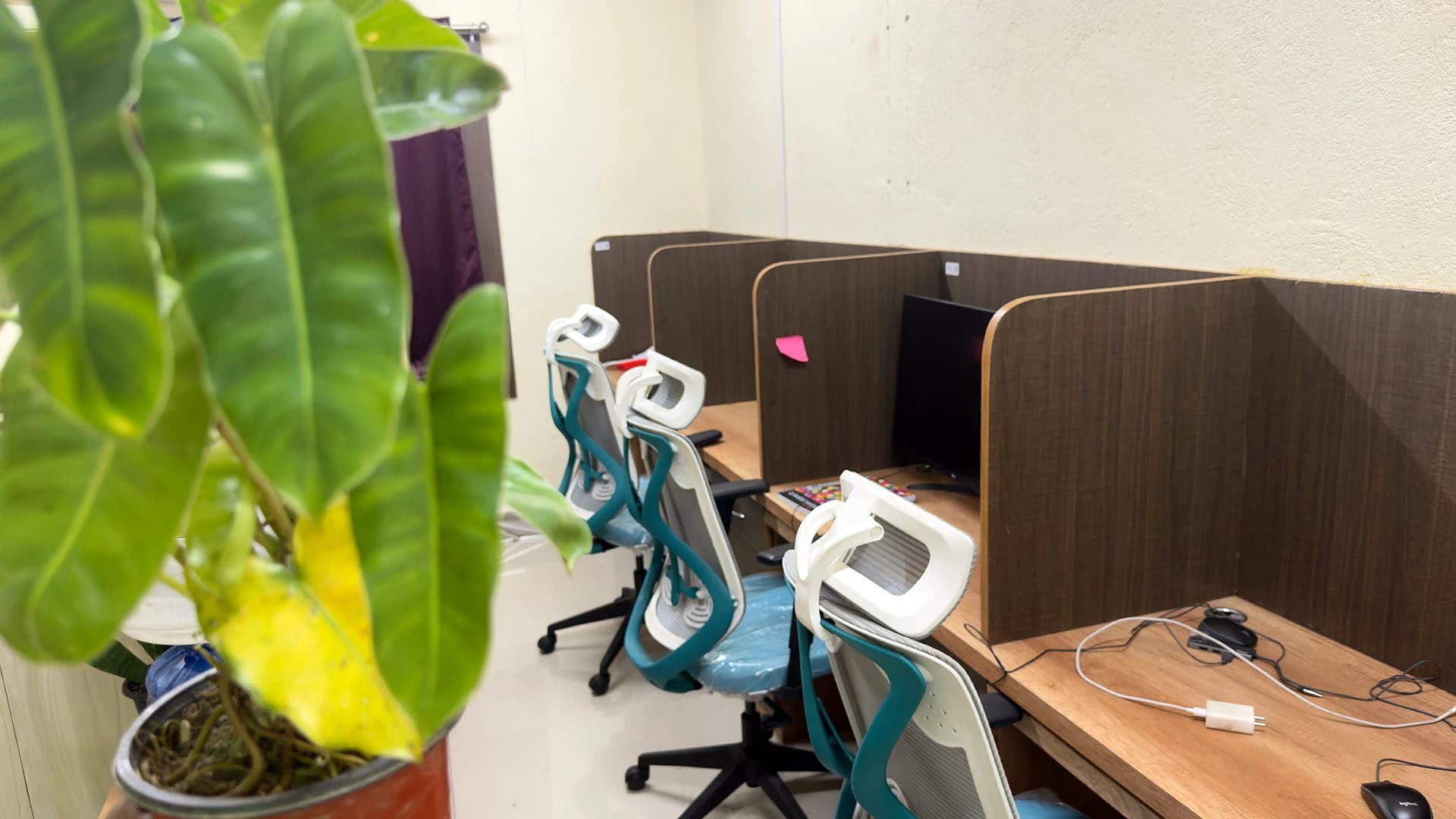
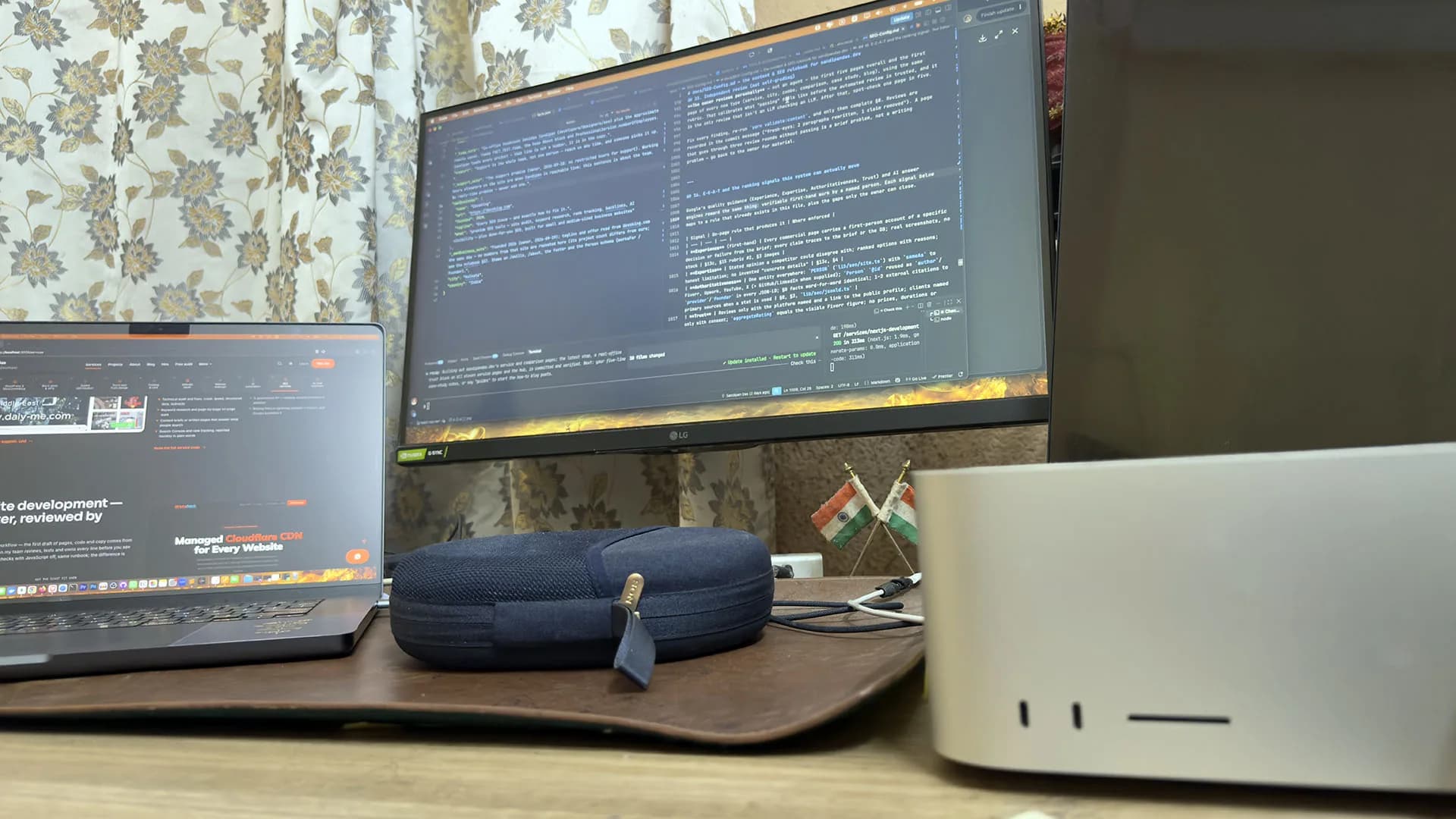
The team: three developers, a designer and three SEO specialists in the Kolkata, India office, plus around six people working remotely. Landing pages are drawn by the designer and built by a developer at the next desk — and tried on the phones on this table.

Sandipan Das
You talk to me; I’m the one accountable for the work.
- Availability
- The team works on your schedule, in your time zone.
- Support
- Support is the whole team, not one person — reach us any time, and someone picks it up.
Pricing
How a landing page is priced
A landing page is one of the smallest scopes I write. The page, the form, the tracking and the speed pass each get a line, agreed before the work starts. A second page for a second audience is its own, smaller scope.
Each line is written in plain words, so you'll know exactly what's in the build before it begins.
For how a scope turns into a figure, see the quote page.
- Page, form, tracking, speed — a line each
- Second page: a smaller scope, once the first has numbers
- Changes after launch: inside a care plan
Next step
Let's plan the page for your next campaign
On the call we settle what the page has to bring in and which stack suits it. You'll leave with a rough range for the build.
What makes a high-converting landing page?
- A high-converting landing page repeats the promise of the ad that sent the visitor, shows proof straight after it, answers the main question and puts the form or call button in plain sight. It draws fast on a phone, and the copy comes from the client's own offer. It's the order I build every landing page in.
Do you build a landing page for Google Ads and Meta ads campaigns?
- A landing page for Google Ads or a Meta ads campaign is built from the ad's own copy and offer, and it's designed for the phone the click arrives on. Paid advertising is a service my team offers too, so the campaign and the page it lands on can be scoped together.
Landing page vs a full website — which do I need?
- A landing page fits when paid or campaign traffic goes to one offer and you want visitors to take one action. A full website fits when visitors arrive with different questions and need to browse. The two run side by side well — the site for search and trust, a landing page per campaign — and the landing page is the smaller build, so it's the natural place to start.
Can I duplicate the landing page for my next campaign myself?
- On WordPress, the landing page is built so you can duplicate it in the editor, change the headline and the offer, and point the next campaign at it yourself. On Next.js the page is code, so each new page is a small scope with my team. I'd pick WordPress for many campaigns and Next.js when load speed matters most.
How do you measure whether the landing page works?
- A landing page is measured two ways: load speed on a phone before and after the build, and conversions per campaign in your own analytics — form submissions, calls and purchases against the clicks that arrived. Each monthly read says what to change next, and you'll see conversions from real numbers as they come in.
When is a custom landing page the right choice?
- A custom landing page is the right choice when the offer is specific and the page needs its own layout, designed around your brand and your ad. When you'll run many campaigns, a WordPress page you can duplicate is the practical route. The speed pass and the tested form come with both, and the design is approved before the build starts.
Published · Updated