
Web developer in Uttarpara: what your workshop makes, in plain words
If I'm your web developer in Uttarpara, the first thing I build is a plain page that says what you make or supply, with photographs of the work beside it. Along this stretch of the river, large employers once took much of the local supply trade. A supplier who sold to one of them had little reason to write down what the workshop could do, so that is where we start.
Overview
What does a new buyer need to see?
A new buyer has never been inside your workshop, so the site has to show it to them. Photographs of the machines and the finished pieces do that better than any description.
I'd start with the machines you run and what each one can make. That's the first thing a new buyer weighs up.
Jobs you've done can go on too, where your contracts allow it.
What gets built here
Capabilities, photographs and a contact
The parts of a supplier's site, in the order I build them.
- 01What you make, fix or supply — each item on its own line, with sizes or materials where they matter.
- 02Photographs of the workshop and the work — machines, finished pieces and jobs in progress.
- 03Who to contact — the one address or number that every enquiry goes to.
What a scope from me looks like
The first scope, written out
The capability list goes first in the scope, because every page depends on it.
You correct my draft of it until it reads right.
A full product catalogue is a phase-two line.
The enquiry form that takes drawings or photographs sits in phase two as well, ready for when buyers start sending them.
Included
- A written scope: every page and feature as its own line, agreed before work starts
- Design to build, reviewed on a staging URL that stays open the whole project
- Mobile first — checked on a real phone
- A capability page drafted from a conversation, in plain words
- A gallery of the workshop and the work
- Domain, hosting and every account created in your name from day one
- Basic on-page SEO: titles, descriptions, headings, sitemap, Search Console connected
- A runbook at handover: how to edit it, what renews and when
Phase two
- A product or capability catalogue
- An enquiry form that takes drawings or photographs
- Ongoing SEO once the site has traffic to read
- A maintenance plan once the site is live
- Logo and brand design, quoted separately from the build
Not doing
- Guaranteed rankings
- A launch before your sign-off
Where this comes from
The desk the work comes from
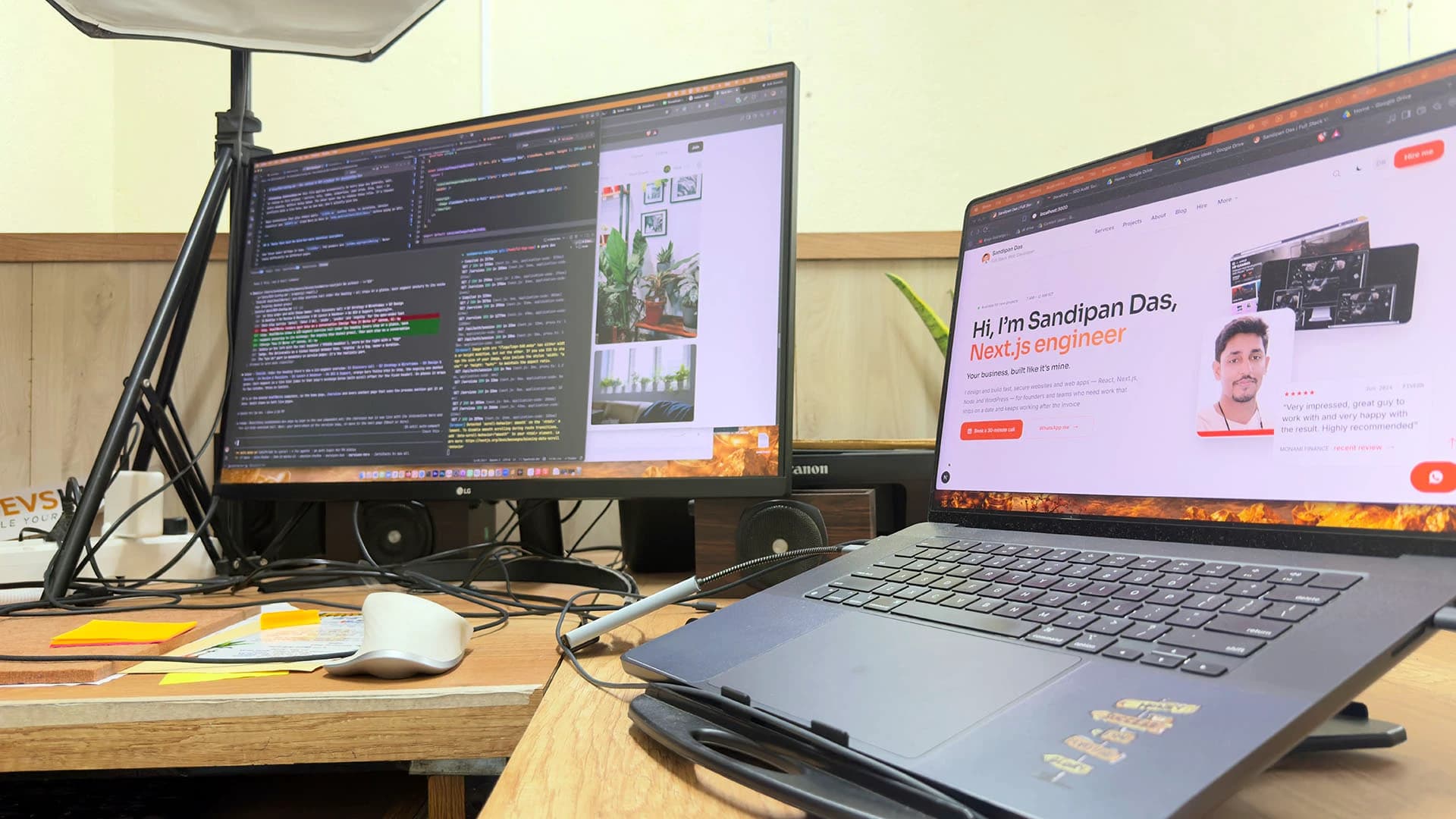
I lead every site my team builds, from the Kolkata, India office.
The testimonials page holds 890+ five-star reviews across Fiverr, Upwork and direct clients, and the projects page shows a selection of the work behind them.
You work with me directly, and my team builds what we agree.
What moves the number
What I'll ask before the scope
Rough answers are fine at this stage. We firm them up together while the scope is written.
- 01How many things you make or supply need describing
- 02Whether any of it is already written down, in an old quote, a brochure or a letter
- 03How many photographs exist, and how many still need taking
- 04What your past contracts let you say about the work
- 05Whether you'll keep the site updated yourself, or hand that to my team
Where this runs over
What a site can't do for a supplier
These sit outside what I build.
- A site doesn't sell for you. The reply to each enquiry is still yours to write.
- I won't describe work you haven't done. Every item on the page is something you have confirmed.
- I don't supply a list of buyers. Finding them is part of your selling, and the site supports it.
Nearby
Further along the river
Serampore is another riverside town in Hooghly district.
FAQ
Getting a workshop online
Questions a workshop asks before its first site.
Where does a workshop with no website begin?
- The place to begin is a list of what you make or supply, in your own words, and a few photographs of the work. I turn that into the first draft, and the rest of the site is planned around it.
Will a website bring work in?
- A website lets a buyer who is searching find you and check what you make. Whether that turns into orders depends on how you answer the enquiry, and that part stays with you.
Why would a new buyer want photographs?
- Photographs let a buyer see your machines and the finish on your work before they get in touch. Each photograph gets a one-line caption saying what it shows. A machine's make and size can go in that line too.
What if we only make one or two things?
- One or two products still deserve clear pages, each with photographs and the sizes or materials you work with. A small site that says exactly what you do is a perfectly good start, and more pages can be added as the range grows.
Can our own staff update the site?
- Whoever in your business handles enquiries can update the site from the editor, with the handover runbook beside them. Everyday changes, such as a new photograph or a new product, don't need a developer. Larger changes, such as a new section, can be scoped with my team when you need them.
Next step
Talk me through the workshop
You describe what you make, and I take notes. Those notes become the first draft, and you correct anything I've got wrong.
Published · Updated